
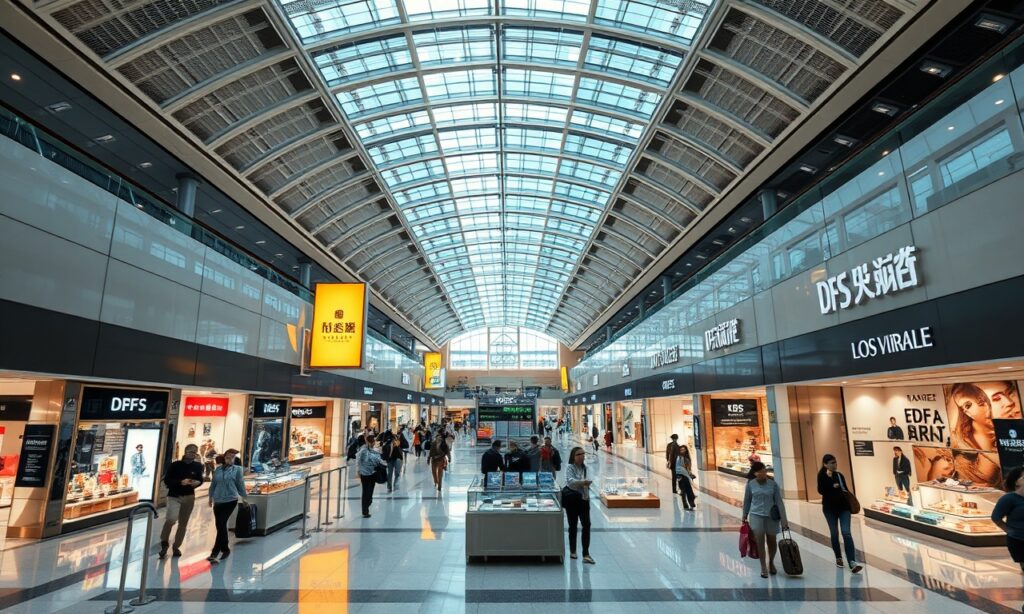
The Great Re-shuffling: Navigating Asia’s Travel Retail Consolidation
- The luxury travel retail landscape in Asia is currently undergoing a profound structural “re-shuffling.” As the industry moves toward a projected $172 billion global market value by 2033, the primary narrative of 2026 is no longer just about passenger volume—it is about the consolidation of retail power.
- For luxury brands and retail operators alike, this era is defined by a massive realignment of who owns the “real estate” of the traveler’s journey, particularly in the high-growth corridors of East and Southeast Asia.
-
The Macro Drivers of Consolidation
- The “re-shuffling” we are witnessing is not an isolated occurrence; it is a strategic response to two converging trends: the need for operational scale and the regional diversification of retail interests.
- Post-pandemic recovery has revealed that while passenger footfall is returning, the economics of airport retail require larger, more integrated portfolios to sustain high-margin luxury experiences. Consequently, we are seeing a move away from fragmented, independent concessions toward “mega-consolidations” where a few dominant players hold the keys to the most lucrative travel hubs.
-
Key Structural Shifts in 2026
- Two major moves currently serve as the vanguard for this transition:
-
The HK/Macau Corridor Transition
- The agreement for DFS Group to sell its travel retail operations in Hong Kong and Macau to China Tourism Group Duty Free marks a pivotal moment. This transition represents a shift in the management of one of the world’s most significant luxury corridors. For brands with heavy footprints in these regions, the change in operator implies a transition in management styles, service standards, and, most importantly, the digital infrastructure that supports the shopping experience.
-
Avolta’s Japanese Expansion
- Simultaneously, Avolta’s acquisition of DFS Okinawa signals a strategic pivot toward Japan as a primary growth engine. By securing a foothold in the Japanese market, Avolta is positioning itself as a regional powerhouse capable of balancing Western retail standards with the unique consumer behaviors of the APAC region.
-
The Challenge of Brand Consistency
- For luxury brands, the “Great Re-shuffling” presents a significant risk: Inconsistency. When the operator of a concession changes, the brand’s “home” can feel fundamentally different. A shift in who owns the lease can lead to fluctuations in:
- Signage and Aesthetics: The visual “premium” of the environment.
- Customer Flow: How shoppers are guided toward the brand.
- Digital Integration: The availability of seamless, personalized retail tech.
- If a brand’s experience changes every time the lease holder shifts, the brand equity is diluted. The “luxury” feel is destroyed by the friction of a changing operational environment.
-
A Strategy for Brand Sovereignty
- To navigate this volatile ownership landscape, brands must pivot from “Lease-Dependent” to “Experience-Sovereign” strategies.
-
1. Invest in “Portable” Experiences
- Brands must prioritize digital and interactive assets that are agnostic to the physical infrastructure. High-quality digital installations—such as interactive wayfinding, virtual try-ons, and personalized content walls—can be deployed across different operators, ensuring that the brand experience remains identical whether it is in a China Tourism Group-managed hub or an Avolta-managed one.
-
2. Contractual Autonomy for Digital Assets
- In new operator agreements, brands should seek “Digital Sovereignty.” This means ensuring that the control over digital signage, content management platforms (CMS), and data-driven personalization remains with the brand, rather than being entirely dependent on the operator’s default tools.
-
3. Portfolio Auditing and Mapping
- Luxury groups must conduct a rigorous 36-month audit of their concession ownership. Identifying where operators are consolidating allows brands to proactively engage with new partners to align on service levels and technological requirements before the transition is finalized.
-
Conclusion: Controlling the Experience
- The “Great Re-shuffling” is a test of brand resilience. While operators may own the floor space, brands must own the experience. In an era of shifting leases, the market leaders will be those who can decouple their brand’s “soul”—its premium feel, consistency, and technological edge—from the physical walls of the concession.