
Squeezing Margins: Turning Rising Operational Costs into a Catalyst for Digital Kiosk & Omnichannel Adoption
The travel retail industry is facing a stark reality in 2026: the “premium” overhead of physical retail is becoming increasingly difficult to sustain. With operational costs in some regions spiking by as much as 41%, the industry’s traditional model—relying on high-touch, labor-intensive service to drive luxury margins—is reaching a breaking point. For operators and brands alike, the question is no longer if they should digitize, but how quickly they can do so to protect their bottom line.
Recent market reports for 2026 highlight a dual pressure: a significant rise in global operational costs (Research and Markets, 2026) and a simultaneous surge in passenger numbers that demand seamless, high-volume throughput. In an environment where every percentage point of margin matters, the inefficiency of manual wayfinding, repetitive customer inquiries, and fragmented inventory systems is no longer just a minor friction—it’s a drain on viability.
The Shift: From Reactive to Integrated Efficiency
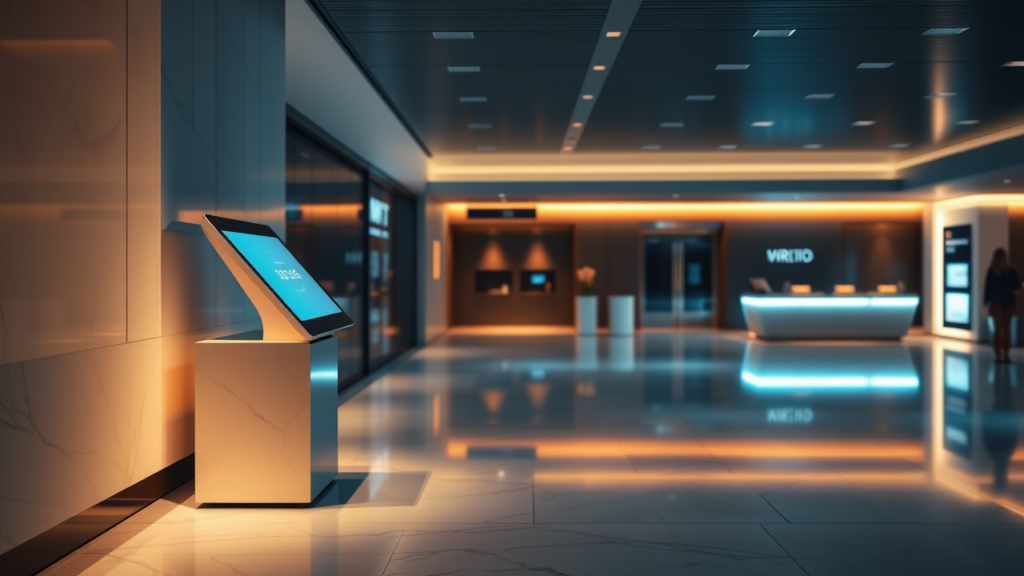
We are seeing a pivot from “reactive” retail tech to “integrated efficiency” ecosystems. Historically, digital kiosks were often treated as standalone novelties—secondary tools for wayfinding. Today, they are being reimagined as the front line of a high-efficiency retail strategy. The shift is toward “Omnichannel Synergy”: ensuring that the physical kiosk, the mobile app, and the online inventory are perfectly synchronized to reduce the labor required per transaction.
DITOC Perspective: The Human-Digital Balance
In our experience, the most successful implementations aren’t just “replacing humans” with screens; they are removing the cognitive load from both the customer and the associate. When a digital installation can handle 80% of routine inquiries (product location, availability, basic specs), it frees up human staff to provide the high-value, emotional “white glove” service that luxury travelers actually crave.
Key Insights for 2026
- The Kiosk Adoption Milestone: With digital kiosk adoption reaching nearly 38% in key regions, the tech is proven. The next step is “Smart Kiosks”—units that use proximity sensors to offer personalized, intent-based recommendations without requiring manual input (Intouch Insight, 2026).
- Omnichannel as a Margin Buffer: By integrating airport retail with robust online/mobile presence, operators can stabilize revenue. If a traveler sees a “limited edition” item online but it’s out of stock in the terminal, a seamless omnichannel bridge prevents a lost sale and maintains brand trust.
- Predictive Intent Engines: The most advanced retailers are moving toward predictive systems. Instead of a shopper searching for a product, the digital environment anticipates the need based on travel status, time of day, and previous interactions (Fast Company, 2026).
Strategic Path Forward
Immediate (0-3 months)
- Audit the Friction: Identify the top 3 repetitive customer questions in your terminal and deploy targeted digital signage or QR-enabled “quick info” modules to deflect these inquiries.
- Kiosk Baseline: If not already present, deploy standard digital kiosks in high-traffic zones to handle basic wayfinding and inventory checks.
Medium-term (3-6 months)
- Omnichannel Integration: Sync your physical terminal inventory with your mobile and web platforms to ensure a single source of truth for “limited” or “exclusive” luxury goods.
- Proximity Personalization: Begin testing interactive displays that trigger personalized content based on shopper proximity.
Foundation (6-12 months)
- Predictive Ecosystems: Partner with technology providers to develop “intent engines” that leverage passenger data (anonymized and privacy-first) to offer proactive, personalized retail journeys.
Conclusion
Rising costs are an unwelcome guest, but they provide a clear mandate for evolution. By embracing the synergy of digital kiosks and omnichannel integration, travel retail operators can transform operational headaches into a streamlined, high-margin experience that meets the demands of the modern traveler.
Sources: Research and Markets (2026), Intouch Insight (2026), Fast Company (2025).