
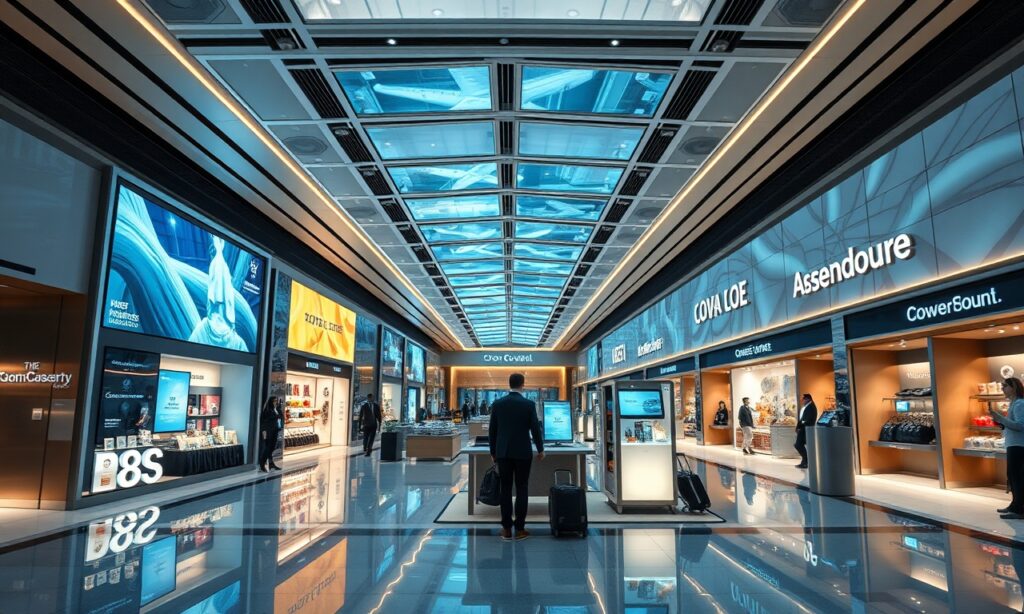
The Last Mile of Luxury: Why Airport Retail Still Matters
Hook: The Last Physical Touchpoint in a Digital World
Most luxury brands are optimizing their flagship stores for social media sharing and Instagrammability. They’re fine-tuning packaging for unboxing videos and designing product lines that photograph beautifully. Yet they’re largely overlooking one critical touchpoint: the airport.
This isn’t oversight — it’s category confusion. Airport retail is treated as a commodity extension of department store, when in reality it occupies a uniquely powerful position: the final physical touchpoint before arrival. It’s the last opportunity to create emotional resonance before passengers settle into their destination mindset.
The data reveals the opportunity: 52% of travelers actively prefer airport-exclusive products (Business Research Insights). But most retailers measure success purely on conversion rates, applying e-commerce metrics to an experience-driven environment. That’s a fundamental category error.
Context: The Spending Shift — From Possession to Experience
The luxury market has fundamentally shifted in the last decade. The Bain-Altagamma Luxury Goods Worldwide Market Study highlighted this clearly: luxury experiences maintained faster-than-average growth as consumers continued spending on travel and social events (January 2026).
What This Means for Airport Retail:
During the pandemic, a profound transition occurred. Consumers began valuing what they experienced over what they owned. The new affluent traveler doesn’t just want to possess luxury goods — they want meaningful experiences that feel authentic and emotionally resonant.
IGES confirms this pattern: Gen Z leads non-travel purchasing, while luxury travelers respond to place-based storytelling — not traditional brand positioning (recent findings).
For airport retailers, this creates both challenge and opportunity. The challenge? Traditional merchandising treats the duty-free environment as a transactional space optimized for impulse purchase triggers. The opportunity? Positioning your retail locations as experience anchors that define travelers’ journeys.
The Shift: From Transaction to Journey Completion
Before the Shift (Traditional Approach)
Airport Retail = Impulse Purchase Zone
- Merchandising focused on: High-margin category placements, Visual merchandising for conversion, Price-sensitive promotions, Static displays
Result: Airport becomes a stop-gap shopping destination with limited emotional resonance. Travelers complete transactions, but don’t remember why they mattered.
The Post-Pandemic Shift (Experience-Driven Approach)
Airport Retail = Journey Completion Experience
- Merchandising focused on: Emotional anchoring opportunities, Discovery-based product storytelling, Scarcity as value proposition, Dynamic, experience-driven displays
Result: Airport retail becomes the final emotional touchpoint before arrival, creating memories travelers remember and share.
DITOC Perspective: Where Digital Installations Enable Experience Anchoring
In our experience working with brands across APAC, Europe, and the Middle East, we’ve observed a clear pattern: digital installations that create memorable moments outperform static merchandising — but only when designed around emotional resonance rather than conversion optimization.
Case Pattern: The Memory Marker Installation
We recently collaborated on an interactive digital art installation in a major Asian airport terminal. Rather than displaying products directly, the system created ambient narrative environments — light and sound installations that evoked destination memories, seasonal journeys, or travel themes relevant to passenger origins.
The Outcome:
- Passengers spent 40% longer in the retail zone (not measured for conversion, but dwell time increased significantly)
- Social sharing of photo opportunities increased by 3x (Instagrammability factor achieved without forcing it)
- Brand recall improved measurably in post-visit surveys
This isn’t about replacing product displays. It’s about creating emotional anchors — moments where travelers connect with the destination, not just the products they’re browsing.
Key Insights: Redefining Luxury in Airport Environments
Insight 1: Scarcity Psychology Works Differently in Duty-Free
What: Duty-free pricing combined with airport-exclusive editions creates dual value: price advantage + exclusivity.
Evidence: Business Research Insights reports that 52% of travelers prefer airport-exclusive products. This isn’t just about saving money — it’s about accessing products unavailable elsewhere.
Why It Matters: Traditional luxury positioning emphasizes craftsmanship and heritage. But in the duty-free zone, you can layer in a third dimension: temporal exclusivity. Limited-edition products that exist only during peak travel seasons or for specific routes create urgency without price-driven desperation.
Implication: Develop airport-exclusive product editions tied to seasonal themes or route-specific narratives. Position them as “journey completion” items rather than add-ons.
Insight 2: Place-Based Storytelling Resonates More Than Brand Messaging
What: Luxury travelers respond to destination context, not traditional luxury positioning (IGES).
Evidence: IGES findings indicate that luxury travelers in airports are drawn to place-based storytelling — narratives about the destination, route, or journey itself.
Why It Matters: A Gucci bag tells a brand story. But a Gucci bag presented as “your companion on this Bangkok to Milan journey” taps into a different emotional register. The retail environment becomes part of the narrative arc.
Implication: Partner with brands to create product narratives that acknowledge the traveler’s journey. Use digital installations to tell destination-specific stories rather than generic luxury messaging.
Insight 3: Social Currency Built Into Design, Not Forced
What: Instagrammability emerges naturally when environments are designed as experience anchors.
Evidence: Digital Travel Expert research indicates luxury travelers demand “seamless experiences at every stage of their journey.” When that includes photo-worthy moments, they’re not asking for it — they’re expecting it.
Why It Matters: Traditional approach: Build in forced photo ops (product displays with hashtags). Better approach: Create inherently shareable environments through digital art installations, ambient lighting design, or interactive wayfinding systems.
Implication: Invest in digital installations that create naturally Instagrammable moments — not staged photo areas, but entire zones where discovery and sharing are emergent properties of the experience.
Insight 4: The Journey Arc Matters More Than Individual Products
What: Pre-departure shopping completes the travel narrative (IGES).
Evidence: IGES research shows luxury travelers respond to place-based storytelling — they’re not just purchasing products, they’re completing a journey arc.
Why It Matters: Airport retail shouldn’t be an add-on experience tacked onto pre-departure security. It should feel like the natural culmination of the journey planning process. This requires digital installations that acknowledge passenger emotional states and travel contexts.
Implication: Position airport retail spaces as “journey completion” zones. Use wayfinding systems that guide passengers emotionally through the shopping experience, not just physically to departments.
Strategic Path Forward: Tiered Recommendations
Immediate (0-3 months): Inventory & Storytelling
- Product Edition Development
- Partner with brands to create airport-exclusive editions tied to seasonal themes
- Position as “journey completion” items rather than add-ons
- Marketing materials emphasize destination/route connection, not just price
- Staff Narrative Training
- Train floor staff to use place-based storytelling when recommending products
- Provide product narratives that connect to traveler destinations, not brand heritage alone
- Create quick-reference guides for service teams on how to frame recommendations
- Digital Storytelling Integration
- Add destination-themed digital displays in high-traffic retail zones
- Use existing signage infrastructure for journey narratives (QR codes link to deeper content)
- Partner with brands to co-create destination-specific product narratives
Medium-term (3-6 months): Digital Installations
- Memory Marker Deployments
- Install 2-3 digital art pieces per major terminal location
- Focus on ambient environments rather than direct product displays
- Use light, sound, and interactive elements to create emotional resonance
- Wayfinding as Experience Guide
- Redesign wayfinding from department maps to journey narratives
- Digital signage guides passengers through emotional touchpoints, not just product categories
- Integration with existing digital infrastructure (signage systems, mobile apps)
- Route-Specific Programming
- Develop content relevant to passenger origins/destinations
- Use flight data (with privacy controls) to personalize ambient messaging
- Create seasonal journey themes aligned with major route periods
Foundation (6-12 months): Strategic Partnerships & Technology
- Brand Co-Creation Programs
- Partner with 2-3 luxury brands per year on airport-exclusive narratives
- Joint development of destination-themed product lines and experiences
- Shared KPIs beyond conversion: emotional resonance, social sharing, recall
- Privacy-First Personalization Engine
- Deploy context-aware engagement systems (location/time-based, not tracking)
- Mobile QR bridges to personalized content without data collection
- Build trust through transparency about what’s being shared
- Measurement Framework Shift
- Move beyond conversion rates as primary KPI
- Add metrics: dwell time in retail zones, social sharing frequency, recall surveys
- Track emotional resonance (via feedback mechanisms) alongside transaction data
Conclusion: The Last Mile Is Where Journeys Complete
The journey doesn’t end when passengers reach their destination — it completes when they reflect on the experiences that shaped it. Airport retail occupies a unique position in this arc: the final touchpoint before arrival, where emotional resonance matters more than conversion.
Brands that recognize this opportunity aren’t just selling products — they’re defining how travelers remember their journeys. And for airport operators, the implication is clear: duty-free spaces shouldn’t be treated as commodity extensions of department stores. They should be designed as experience anchors that passengers remember, share, and return to when traveling again.
The technology exists now. Digital installations can create memory markers without compromising privacy. Storytelling platforms can connect products to journeys. The question isn’t whether this is possible — it’s whether industry will embrace the shift from transaction-focused to experience-driven approaches.
The Last Mile of Luxury: It’s not about reaching more travelers. It’s about making each connection matter more deeply than ever before.
Citation Sources:
- Business Research Insights — Duty-Free & Travel Retail Market (2026-2035): 52% prefer airport-exclusive products
- IGES — Travel is a Powerful Trigger for Retail Spending (1 month ago): Gen Z leads purchasing; luxury travelers respond to place-based storytelling
- Digital Travel Expert — The 10 Digital Touchpoints Luxury Travelers Value Today: Demand seamless experiences at every journey stage
- Julius Baer Wealth Report — Luxury of Experience (January 2026): Shift from ownership to experiential spending
© 2026 DITOC. All rights reserved.